BookTok and Genre-Aesthetic Sensibility
-
📌 Reading as Signifier on BookTok
📌 Genre Creation
📌 Cultivating Our Own Aesthetics
📌 Three Steps for Engaged Reading
📌 Three Steps for Content Creation on BookTokThis article contains affiliate links for Bookshop.org

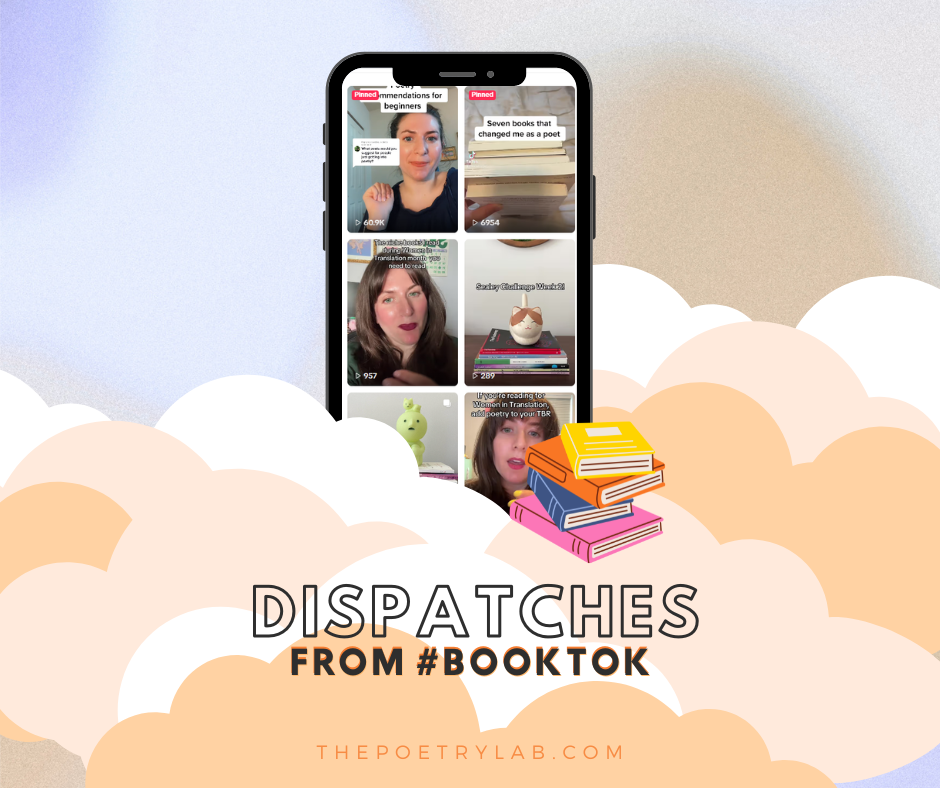
It seems like every TikTok/Bookstagram post begins with a hook laden with buzzwords within the first 2 seconds, like “Dark Academia recs for the classics lover in your life.”
I’ve been thinking a lot about this, as a content creator and writer. As a writer: if I ever publish a book, will it be essentialized as “weird girl lit”? And as a content creator: how can I grab an audience’s increasingly diminishing attention span without using grabby keywords? I admit I’ve been guilty of using ubiquitous terms such as “cool-girl lit” or “crying lit” for poetry recommendations as a way to usher in users that may feel like they wouldn’t otherwise identify with poetry. On a platform that feeds on these buzzwords to build their algorithm and connect other users, it feels almost impossible to not adopt whatever lingo is trending. There is no obvious way to bypass feeding into the algorithm.
Another question I ask myself again as a content creator: does my freak match others’ freak? When someone says they have “unhinged” taste, it can signal several different TikTok subaesthetics. Maybe their idea of unhinged lit is more graphic, like the mother-daughter cannibal duo in Lucy Rose’s The Lamb. Or maybe their flavor of unhinged is more interior? It's all very nebulous. These differences can lead to in-fighting on what constitutes a given aesthetic-genre.
I know it will never be possible to fully define a genre or aesthetic. To impose rigidity on genre can be limiting and ultimately doesn’t allow us to challenge its very constructs/building blocks. At the same time, having such openness on what constitutes a genre defeats the purpose of labeling altogether. I like to see genre as membranous—a pliable structure that allows readers and writers the opportunity to question and play into or against the very aspects that create the genre while still providing some level of stability.
Reading as Signifier on BookTok
The moment we’re in reminds me of an offshoot of what Sadie Stein describes: reading has become “reading as signifier,” where the act of reading the book becomes a cultural currency, a status symbol, rather than for the enjoyment of the text itself. This isn’t a new phenomenon; Stein coined “reading as signifier” back in 2014.
You’ve also seen this before—BuzzFeed listicles with clickbait headlines titled “24 Summer Reads that will make you the envy of the swim club” or a pap photo of Kendall Jenner reading Melissa Broder’s So Sad Today with an obscene number of notes crammed in a slim book, with people debating in the comments whether or not the photo is staged and if she actually writes 50 Post-Its for a 200-page book she looks to be halfway through.
What we’re seeing on TikTok and Instagram is an evolution of this, except instead of a particular book serving as a signifier, it’s now an aesthetic—Dark Academia, Romantasy, Sad Girl Lit, you get the picture. Not only does TikTok serve as a site for marketing these trends, it can also serve as the epicenter of the aesthetic’s genesis.
For instance, “Sad Girl Lit” and “Unhinged Lit” feel like unlikely aesthetic sensibilities to skyrocket in popularity, especially when you consider misogynist backlash to similar aesthetic movements like Confessionalism. However, I’d argue that TikTok has somewhat normalized this raw and untidy display of character. It’s very likely at one point or another that you’ve stumbled upon someone (usually a white woman) sobbing in front of the camera, recounting a minor inconvenience. Or maybe you’ve come across a Trauma Dump Candy Salad, where two creators will dump a bag of candy into a bowl for every graphic, traumatic experience they share.
This is an evolution of the reading as a signifier of the BuzzFeed-listicle era. Whereas most of the signifying of the mid-2010s was relegated to wearing literary garb or pap shots of celebrities reading, the aesthetic sensibilities have become an embodied performance.
Genre Creation
On the one hand, this is a democratizing phenomenon, where content creators and audiences are creating the genre, (loosely) dictating what fits, and creating a demand for more books like it. This is a departure from publishing ecosystems past, where the publishers dictate trending genres and the audience responds through reviewing. But at the same time, are these genre designations both nebulous and confining? Does designating Wuthering Heights or Margo’s Got Money Troubles as “Weird Girl lit” strip them of their nuance and interestingness?
In my previous post on BookTok vs. Book Twitter, I mentioned that BookTok is not the best outlet for slightly more in-depth literary analysis. How do we avoid flattening book recommendations on a platform that demands this very compression?
Some may ask what is so bad about boiling a book down to its (perceived) essence on social media if it’s getting people to read. I agree: social media can get people to read, and in an age where literacy rates continuously dwindle and most people haven’t read a book since high school, I think it can be a great tool to make reading more accessible.
However, the way these platforms are built creates passivity. It reinforces users to try and fit in with a scripted identity rather than discovering their sensibilities and identity as a reader on their own terms, without the watchful eye of the social media panopticon. Personally, that’s one of my favorite parts of being a reader—finding books and noticing how these literary proclivities change over time. After finishing a book, I love sifting through the stacks in all of their iterations: the collective and the personal, literal and digital, stacks of the past and present.
Cultivating Our Own Aesthetics
These issues don’t mean we shouldn’t post content on TikTok—it’s still a good way to find new books to read and create a literary community. But asking these questions is vital to understanding our relationship to reading: what we read, how we read, and why we read. It all boils down to a level of mindfulness on social media, which most algorithmic platforms discourage. We need to cultivate an understanding of how platforms can shape our reading journeys and, when we engage with social media mindfully, allow us to forge a more nuanced reader identity, beyond the internet’s prescribed genres.
I recently finished Natalia Ginzburg’s wonderful novel Happiness, As Such and as I turned the last page, I was struck with a strangely oxygenating gut-punch I had previously only encountered completing Elena Ferrante’s Neapolitan Quartet. Once I realized I was fascinated by how both Italian women depict fascism’s aftermath, I went down a rabbit hole to come up with an Italian literature reading list. I thumbed through an Italian short story anthology I read a while back, noting who wrote the short stories I loved and who had novels available in English. I scoured Tiktok for creators recommending Italian literature and came across @balloobreath reviewing The Beautiful Summer by Cesare Pavese and @bewareofpity lauding One, None and a Hundred Grand by Luigi Pirandello. This proactive, two-pronged approach allowed me to consider my literary sensibilities without an algorithmic influence, which then in turn allowed me to mindfully search, engage with, and discover novels I had not previously heard of.
I don’t want my TikTok or Bookstagram audience to see me as a marketer or a sponsor–to hawk a book scorches my love for reading and for readers. My goal is not to get you to adopt my exact literary tastes, as exquisite as my tastes are. I do not want to have a hand in building your identity as a sad girl or coquettish reader because the algorithm tells you it’s a desirable aesthetic, and therefore will increase your cultural value in this algorithmic circle of hell.
I want my content to be a literary Architectural Digest tour video. I want to show hidden gems that moved me and how they have changed my life and may change yours too. I may use buzzwords, but that’s because I recognize social platforms’ restrictions and users’ attention span and it’s a way for others to discover there’s poetry out there for them.
It’s also important to diversify the content you consume and create. As a user, you can switch between your For You Page (FYP) and a feed of creators you follow, as a way to create a level of curation while also exposing yourself to new content. As a creator, you can create both short-form videos to hook your audience in and long-form/series videos that expand on ideas/points made in those short-form videos.
Three Steps for Engaged Reading
Here are some ways you can make your reading identity less passive and more thoughtful:
Keep a reading journal of some kind. It could be a notebook, it could be a Storygraph or Goodreads account. You don’t even have to write a whole book report about your reading–just a few words and a star-rating (if that’s your jam) will do. The important piece to this is that you have a log of books you loved, hated, or were too bored to finish. Once you’ve established an archive, you’ll surprise yourself by how often you flip back to and reflect on the books you read months or years ago.
Be mindful of your browsing habits on social media. It’s all right to occasionally rely on the algorithm, but sometimes consuming content via direct searches or even scrolling your Friends feed creates a more interactive and intentional engagement.
Seek out content from different platforms and mediums. I love using Substack and blog posts, but I also love more “traditional” content streams, such as seeking out book reviews and literary criticism from magazines and university presses. With newspapers like The Washington Post and The Associated Press shuttering their book review sections, it’s more important than ever to support them (and open yourself up to new books).
Three Steps for Content Creation on BookTok
If you’re a creator, here’s how you can encourage your audience to engage in their reader identities in an active and thoughtful way:
Try reading a book within the genre that might be outside of your comfort zone to give you a better sense of the genre’s possibilities. Then post a video after reading, offering a genuine review and also discussing how the book made you consider this genre in a new light.
If you want to use buzzwords like “whimsy-goth lit,” consider researching both the roots of this aesthetic as well as the context surrounding the book itself. This will further ground your interpretation of the buzzword aesthetic and will also allow your audience to think more critically about the aesthetic.
Post across different social media platforms if you have the bandwidth. Each outlet has its own benefits and drawbacks. TikTok and Instagram allow for more multimedia formats but perhaps isn’t the best place for more in-depth analysis. Consider creating blog, Substack, or even YouTube content.


This article was published on September 29, 2026. Written by: