Brittany Rogers’ Good Dress and the Poetics of Audacity

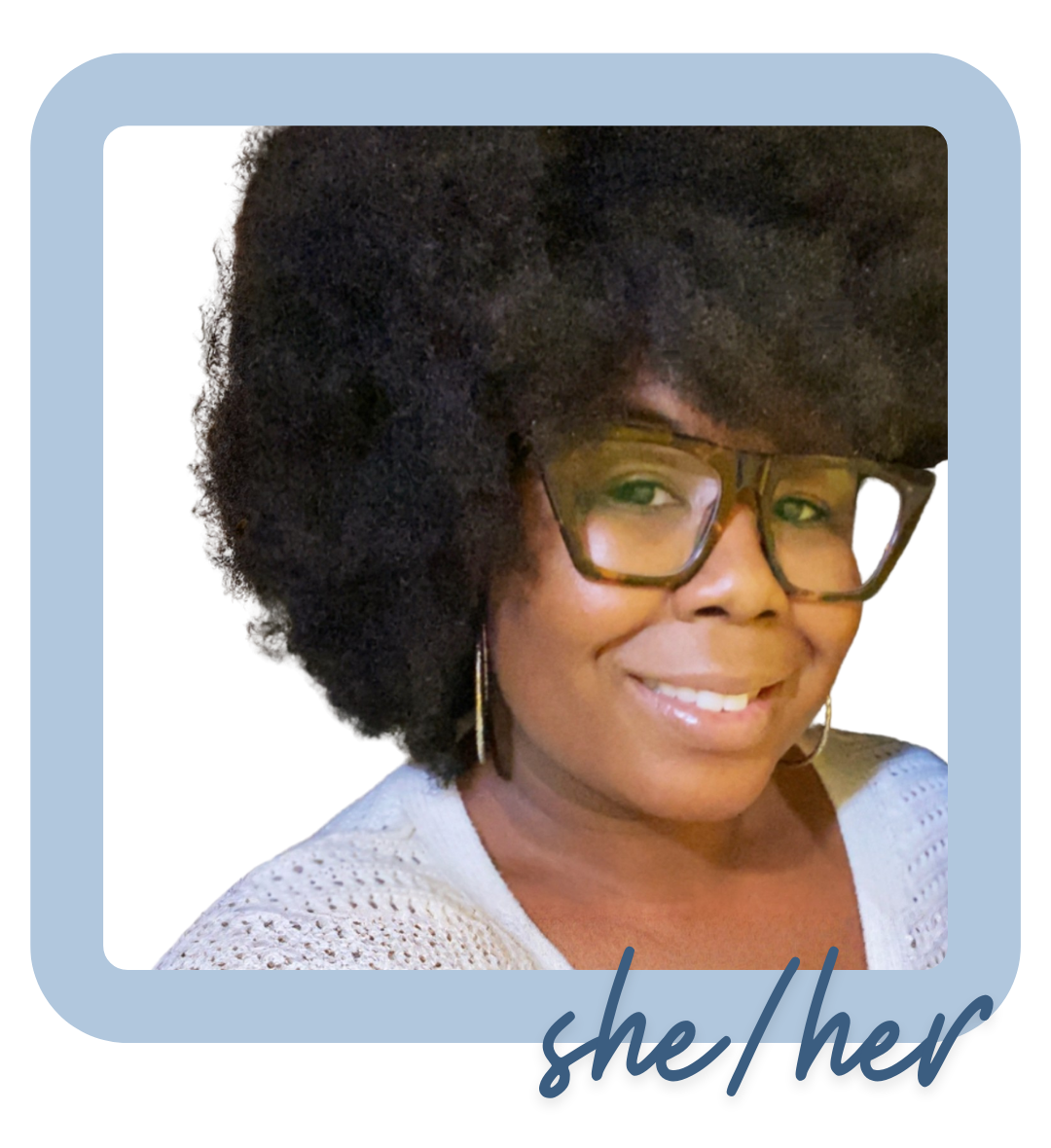
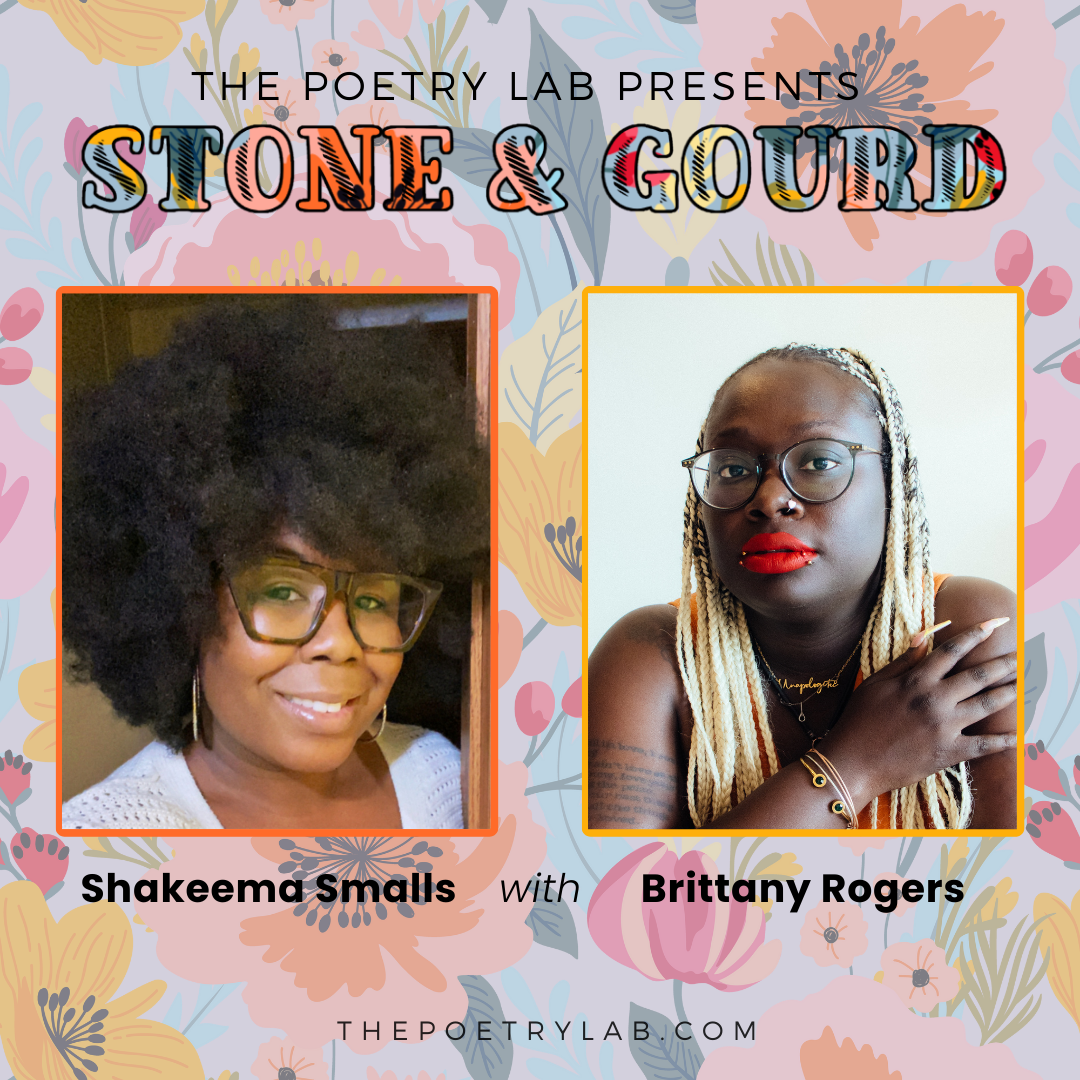
I attended a poetry workshop with Ajanae Dawkins in 2021 where she brought in poet and guest instructor Brittany Rogers to share some of her own work and wisdom. Brittany is Editor-in-Chief of Muzzle Magazine and Co-Host of the VS Podcast, as well as a Tin House workshop alum. From the time we met, Brittany’s love and embodiment of Detroit shone through her work and personality. This last year, she published her debut collection, Good Dress, where she explores the intricacies of growing up as a Black girl in Detroit and the idea of Black matriarchy and audacity. We sat down to talk about these experiences and also how she explores poetic craft in her work.
A Tribute to Black Girlhood
Shakeema Smalls: Brittany, this book feels like a tribute to Black girlhood, as a Black girl who grew up as a lover of hip hop and of women rappers, family migrations, and teenage literary obsessions. This book is so Detroit. But even though I grew up in different cities, mine also is a story of family migrations and how we maintain those connections and culture(s). I thought about these constellations of Black girlhood and the things that we did, how we experienced the world. When I was growing up, it was all very internal, and so I didn’t realize just how many of us had similar experiences.
How did Good Dress come into being?
Brittany Rogers: I was writing a different book. I was writing a book that I thought was a chapbook. Then I went to a writing retreat at VONA (Voice of Our Nations Arts). That was where I realized I had a lot more to say about this topic, and thought that maybe it was a full-length collection. There was a lot more about my experience as a mother, as a Black mother, specifically, that comes with medical stuff, matrilineage stuff…by the time I started submitting that first manuscript, I realized that I felt distant from it.
I was talking to a mentor who told me I could edit the poems individually or that I could start something new about what I am currently passionate about. From the time you submit a book, it can take years until publication. If you're already distant from the book, then…I looked to see if there was anything in the manuscript that sparked something for me. I think there were like maybe six or seven poems. Ironically, none of those poems made it into Good Dress.
SS: I was just talking to a friend about anchor poems. They said, “I have all these poems, but they're not connected.” I immediately referenced how anchor poems help us be in conversation with ourselves when writing poems.
BR: Yes, and I realized that I was excited to talk about the themes of migration and audacity. I realized that audacity is the umbrella of themes covered in my book. That sent me on a completely different tangent, and at the time I was in grad school. I was already working on my thesis. But everyone gives you the speeches, “Don't expect your thesis to become a book.”
SS: I always thought that was the goal, to have a book as your thesis.
BR: I think they were trying to relieve the pressure to publish. Yes, the ideal would be that you’d come out of it with a book, but that book could change 10 times between now and whatever time it is published. But I did come out of it with a book, so that's how it came to be.
SS: I remember when we got to the poem “Detroit Public Library, Knapp Branch: Overdue Notice.” I felt exposed when faced with myself at 14 and what could pass as my actual library checkout list with all the Zane, Eric Jerome Dickey, and Omar, Tyree I could read.
I talk to my girlfriends as adult women now, and I realized we were having these internal conversations about some of the class violence and misogynoir that we experienced. But I think at that time we just didn't have words for it. Strangely enough, reading these books was like an inroad to understanding ourselves and the culture we were coming up in. Did y'all have the underground Black Girl book clubs when you were in middle school?
BR: We wouldn't have called it that, but I feel like it happened for us in seventh and eighth grade.
SS: And how did being a library kid shape you as a reader and writer?
BR: I have been a book baby since I was like a little kid. My mom kept us in the library. Something formative for me is that my mom had me in high school in her 11th-grade year, and she now has a doctorate. So pretty much for my entire life, my mom has been in school in some shape or form. When I was little, if I wanted to hang out with my mama, I needed a book because my mama was studying. I also spent a lot of time up under her or my grandmother, just reading.
I just published an essay with Torch about how my grandmother was my introduction to romance novels, which is a gateway to erotica, if you will. Being around my mother and grandmother, you kind of had to read because that's what they were doing. When my mom was at the library, I was at the library. That made me a devourer of books, early on.
SS: For me, it was always that the library is the one place you can go that has air conditioning and lots of things to do in terms of always having new books to read.
Imperfect Narratives
SS: Good Dress is a collection where Black girlhood is uplifted. There are your experiences as a Black mother, as a Black woman. There are also poems about how you're navigating, not just your city's culture, but your own life and needs and the needs of the people around you. Why this particular approach to Black girl or Black womanhood and audacity?
BR: I just feel like Black girls and femmes don't get treated with tenderness. I don't think we’re treated with care, so that's something I try to be careful about in my writing. The difference is in the way I talk to somebody who I love, and the way that I might talk to a stranger. When I'm writing about traumas I've endured, or shared experiences across many other Black girl narratives, I think there's a way in which I try to tell that story as if I'm talking to somebody I love, with that gentleness. I think that's important because I don't think that we get to see ourselves represented with a fullness that includes tenderness. I think there's also this perception that we don’t need tenderness. That we can “take it.” Just because I can take something doesn't mean I have to. That was important to me in writing the book in that yes–I want to talk about all of these things, and also these things are not the sum of who I am. Nor are they the sum of Black girlhood.
SS: Speaking of, you also explore the freedom to be imperfect in these narratives, while also rightfully expecting to be treated with respect.
Some of the issues that I've had as a younger writer even came up when I would read work that I would really like, but where something heavy was just kind of thrown at me as a reader. I’d wonder, “Who did you write this for?” Sometimes I will sit with something, and I’ll ask, “Was that for me?” or “What do I glean from this?” or “How do I move forward now?”
BR: In terms of forming my craft and forming my poetics: Lucille Clifton, Gwendolyn Brooks, and Audre Lorde, for sure. Nikki Giovanni, who was my first favorite poet. Wanda Coleman. I think Wanda Coleman was a person who reminds me that there's somebody out there who's writing for me, with me. Her work has endured in the minds of Black girls and women for so long.
SS: I caught the Brooks and the Clifton influences in your work, and I read that montage in the middle of “Good Ground.” Did you use a particular form or approach to this when you wrote these poems?
BR: I did, it's a sonnet crown. I started writing the second-to-last sonnet in the crown first.
Both of my grandparents are from the South. My grandmother is from Georgia and my grandfather is from South Carolina
SS: I heard you mention Orangeburg.
BR: Yes, that's where my grandfather is from. Both of their families migrated up here to Detroit. They met up here, and they stayed. I was thinking about how I only visited their family homes for funerals and how unfortunate it is. I thought that it was going to be one poem, then I realized, “I think that this holds the container of a sonnet…let me flesh it out.” By the time I finished, I realized that this was a bigger conversation.
In the poems, I'm thinking not just about migration, but I'm also thinking about gentrification. I'm thinking about all the ways that Detroit has changed. I grew up on the more industrial side of the city. I'm an east side girl. Sometimes folks have a lot to say because that side of the city is where there are fewer houses. The west side was more so geared towards folks who are middle class…whether they were actually middle class or not.
I also thought about that transition for me, moving from east to west (Detroit) in my 20s. I lived on the east side all the way through my mid-20s and then moved west. As an aside, when you get here, that's one of the first questions you get asked: “What side of town do you live on?” I realized that the difference was largely just in how that side of the city was built. It’s clear that you wanted people to live here [west side] and you didn’t want people to live on the east side.
But also in the way that people treated folks over on the east side, that just reinforced classism in a city that's already poor, in a city that is so deeply, devoutly Black is fascinating to me.
SS: I love that you mention that for folks who don’t already know, because I've never met a person from Detroit who didn't love Detroit. I don't know if you have. Can you say more about about the city itself and how the culture has informed you and your identity as both a writer and a resident of Detroit?
BR: Detroit is so Black, and this alone shapes so much of my practice, how I move through community, and what my focus and intentions are. A lot of times I find myself reading something, and I’m like, “Oh, I’m not this person’s audience.” Respectfully, it sometimes seems as if it’s an explanation to white folks.
In a way, Detroit makes it kind of difficult to do that because it's so Black. I think our percentage of the Black population has dropped and, even still, it's like 78% Black per capita. Sometimes I see something go viral on Twitter like, “When was the first time you had a Black teacher?” I've always had Black teachers, and I didn't realize until I went to college how—privilege isn’t exactly the right word— it was just fortifying for my spirit to be around Black folks all the time. There are some challenges that I know that other folks have had that I haven't necessarily had, because it just wasn't my experience.
When I say my audience is Black folks, I mean: my audience is Black folks. Detroiters are very fond of adornment, really extra. Zora Neale Hurston said that, for Black folks, the “will to adorn” is like a necessary component of life… I think even in the way that I approach poems, a lot of them are, like, very visual for me. For example, I want people to see the things that I see. We’re so big on: “What does this thing look like?” The extravagance of a look.
People from other places meet me and say, “Your hair! It changes color all the time.” or “You're not afraid to wear those bright colors.” No, because in my head, everyone I’m around in Detroit dresses like this.
SS: You're safe to be in your Blackness in a place like that. You don’t have to feel as if there's an outside gaze always peering in on you, so that's beautiful.
BR: I think that that shows up a lot in my work too.
Listening to the Poem
SS: We talked about “Good Ground” and your use of the sonnet crown and the kinds of things that influenced your choices of form throughout the collection. For example, in the poems dealing with medical experiences, the form was a literal medical intake form. How did you decide to go with a sonnet crown versus a contrapuntal versus another form poem? What are some things that inspired your experimentation in this collection?
BR: I try to listen to what the poem is doing or saying. I think about how the experience that I'm having translates to what my readers experience. With the medical poems, I was largely thinking about the absurdity of the expectations of Black women. I think that's why that form made so much sense because, even when I'm filling them out, I’m reading, “How often do you feel down and depressed?” “Does it impact work?”
But also the way that I think that we know, as Black women, that I can only answer those questions so honestly before folks start talking about institutions—
SS: —and mandated reporting. All sans cultural sensitivity.
BR: Exactly. So wanting to toe the line between, “I need help,” and, “I need support,” but also: I have three kids. I don't have any days to be lying in the hospital right now. So I was thinking about the clinical and absurd nature of that experience. I decided to have the poems look this way because of these experiences, versus sometimes I simply like the container of other poems. I love the container of ghazals. I love the container of pantoums and how they repeat. I’m thinking about what I want the poem to do, so if the poem has repeating ideas, I’ll see what forms lend themselves to repetition and go from there.
SS: As a poet, I feel that I've learned a lot about my own strengths through my experimentation with form. I was just talking to someone about how I think the block some writers face when approaching form at times is that we think of form in opposition to the poem, when even nature seeks form—your body, your language. Depending on how we want to engage with them, we might have different feelings about exploring forms.
To add, I do want to know more about your exploration of motherhood through poetry and your personal poetics, more specifically. I’m thinking of one of the earlier poems in this collection that lays motherhood raw and vulnerable, “This Time, Postpartum.” You even said that this collection opened with poems on motherhood.
BRITTANY ROGERS
This Time, Postpartum
dresses herself
in a long cerulean
housecoat, cotton
hem dusting her ankles
as she saunters in
without checking
to see if I’m fit
for company.
she kicks her slippers
off at the door
before she moved
about my kitchen,
whipping up a stew
so thick with roots
I’ll be eating
off it for days.
My Grandmother’s Daughter
BR: Somewhere in the collection I realized that I was thinking a lot about girlhood and daughterhood. I'm always thinking about what it means to be my grandmother's daughter, to be my mother's daughter, because my family is a matriarchy. At times, I almost forget that I'm a mother too. My experience as a mother is, in many ways, connected to my experiences as a daughter.
SS: “My Mama’s Mama Lives Alone, Though Perhaps It Is Time:” is touching for that reason, as we think of a Black woman moving being able to rest as she moves into the retirement of her life. If we’re lucky, we get to watch our mothers and ourselves move through these stages of life.
BRITTANY ROGERS
My Mama’s Mama Lives Alone,
Though Perhaps it is Time:
She swears no one has been by to sit
a spell, forgets the croquettes until
the alarms over the stove bellows
its broken note. My mother is a travel agent:
sells Alabama, blade by blade, through Facetime.
Look, my garden. All this year.
These empty rooms, and a walk-in closet.
There is a way to stay
independent. My Mother was grown
enough to move across the country, but oh,
how the pleas rip through her throat
controlled as Mahalia’s voice contralto
when she requests her mama leave
the last place she can claim hers, all hers.
BR: Yes, so my mother moved to Alabama about seven years ago. My grandmother passed at the beginning of last year. I'm a granny's baby, do you hear me? I'm a granny's girl. So I was one of her core caretakers over those last few months.
It was a grief that I thought I anticipated. One I thought I would be able to move through. Because I've lost a sibling. I thought that when it was time, I'd be able to move through the grief.
My grandmother was done with all the active parts of mothering, in some ways. But to watch my mother be so much of a daughter was interesting to me. When she passed, I was very much poised to become the next matriarch, even after my mom and aunties, because they knew who was going to do what.
SS: Very much. In what ways have your own poetics have been informed by your acceptance/rejection of these roles?
BR: When I think about the influences of Black matriarchs, audacity, and migration on my poetics, I am also thinking of transparency, risk, and fluidity.
I know that a draft is becoming a poem when it surprises me, when it takes a turn that I was not expecting. Sometimes that looks like a leap across time, or a shift in ideas or connections. Sometimes that looks like experimenting with form, whether it's traditional form, or a hermit crab form that transforms the look of the poem. On the contrary, when I find myself frustrated with a draft, it is almost always because I have not yet taken a risk—I am writing what is expected or what I already know, or I am hiding from the poem, fixed in what I want to talk about. In any case, transparency and risk go hand in hand with audacity.
This interview was originally conducted on June 22, 2024 and published on September 15, 2026. Interview by: