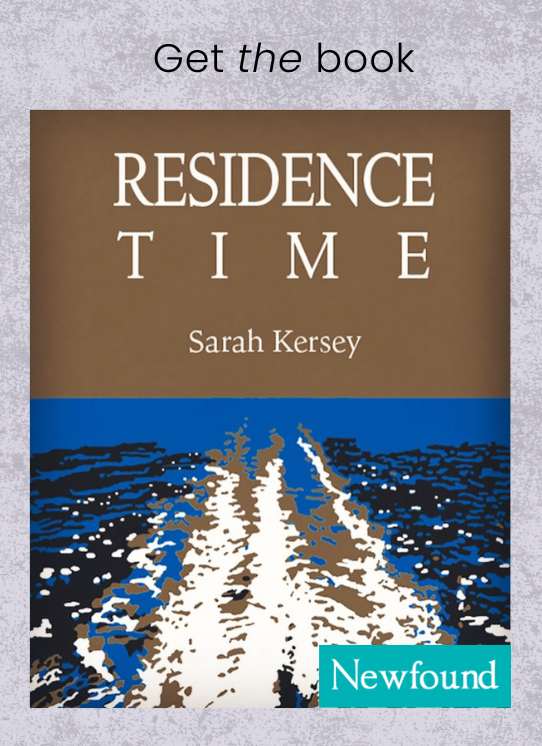
Sarah Kersey on Residence Time: Crafting a Chapbook of Black Ancestry

The 2026 Markus D. Manley Award is now open for applications. Learn more here ↗
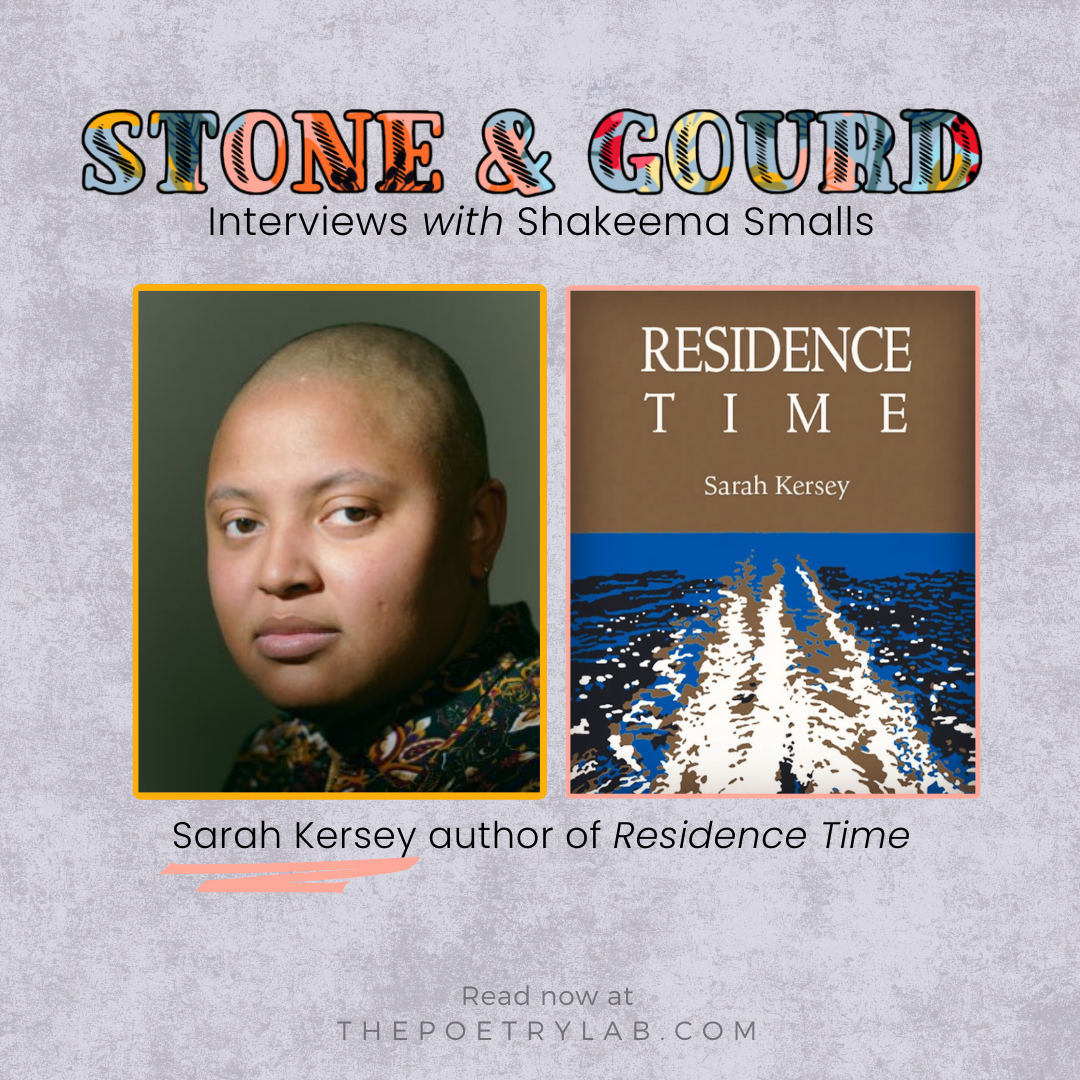
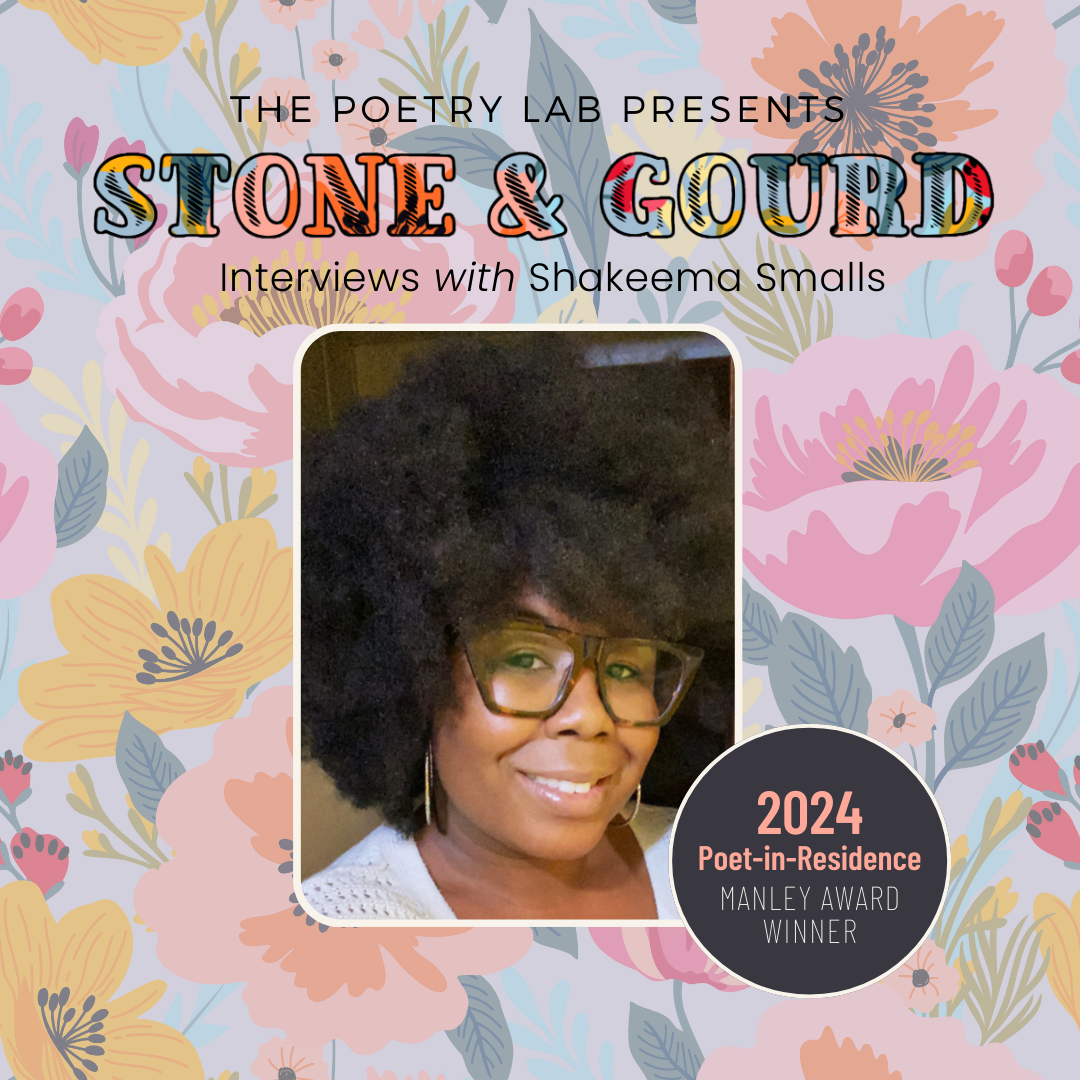
When I attended Tin House’s Winter Workshop in 2022, I didn’t have this mysterious thing called a “manuscript.” Sarah Kersey and I met in a poetry workshop with the poet Derrick Austin. I learned from her that I could apply patience and thoughtfulness to my own writing ethic. As a fellow poet, I appreciated her vibrant poetic lens and deep questioning of the role of the poet in contemporary times. Years later, her debut chapbook, Residence Time, was selected for the 2024 Emerging Poets Chapbook Series with Newfound. We’ve since been able to celebrate her book debut in person in October 2024 in Boston’s historically Black Roxbury neighborhood. It was great to come full circle with a friend and fellow poet. In our conversation, we spoke about this prophetic arrangement of poems, of communing with the spirits of our ancestors, and of being courageous enough to listen, as well as to ask questions of them, in times of tribulation and uncertainty.
A Delicate Remembering
Shakeema Smalls: I'm glad that your chapbook is in the world, Sarah. These poems are beautiful and very surprising in the best ways. As a Black reader, it can be hard to process the gravity of what happened during the Middle Passage, and also, what it's like to deal with that in our collective memory. Your poems approach the subject in such a nuanced way.
The definitions at the beginning struck me, especially the excerpt from Christina Sharpe’s In The Wake, where she references Africans who chose freedom over enslavement; those who jumped from their captors’ ships in resistance. Hers is a delicate remembering of those lost, but also one that bears the weight of memory and science without romanticizing this event. They would eventually become a part of the ocean and its grander life cycle, as elements of our material world.
The scientific definition of ‘residence time’ being the length of time that an object remains suspended in a liquid. This was paired with Sharpe to open your collection. An interesting fact about you is that you’re an X-ray tech, so it’s brilliant to see you make these connections between the scientific and the metaphysical. It takes skill to pull in those different languages. Especially as it pertains to ancestry and what it means to us as Black people.
This collection feels like a meditation on how our ancestors exist through us. What inspired you to write about this aspect of our ancestry? How did this influence how you chose to approach this collection?
Sarah Kersey: In terms of how Residence Time came to be, there was the first poem from when I was 16 years old. This was the seed of an idea that followed me into adulthood.
It exists across different iterations and various tragedies of my life, such as my 20s, which were rough. This collection has followed me through my life in a very real way. The older I’ve gotten, the more the ancestors really started to come into the collection.
In terms of structuring it, I wanted to start broad and then zoom in. Starting from a macro level, and as the reader moves through the book, it zooms in on a speaker who is now in contemporary times.
That’s how I wanted to structure the book. Speaking of the ancestors is so broad. They go back farther than we can count. But when we look at ourselves, even if briefly, we get to see glimpses of who they were.
SS: Ancestry ironically brings us back to the present, time and time again. There are many people we haven't met who are a part of us and who move within us in this life.
You talked about how you went from broad to more narrow in terms of your book’s structure. I realize that some poets don’t like to lead readers. When you think about where you want the reader to rest, did you have an idea of where you wanted your readers to go as they moved through the collection? Whether they be explicit sections or emotional spaces/outcomes.
SK: I would definitely say this comes out when I'm reading my work in front of people.
I like to have a baseline level of trust in my audience to be able to think about it and to come to their own conclusions. I don't like to spoon-feed people my work, or tell them what it means.
Also, I think something that I want readers to experience when they read Residence Time is to be able to sit with poems and stay in places that feel resonant for them.
Transitioning into the Intangible
SS: That's the power of poetry to me, in that it allows people to come to their own conclusions. One of the strengths of good writing is that a reader can be in conversation with you. They can bring their own backgrounds. They can bring their own thoughts.
I also noticed that, beyond the ancestors, living people show up in this collection. In particular, your mother comes up in various poems. Can you talk more about her influence, her resonance within this work?
SK: It's interesting to think about because, within the last year or so, I went back to the original notebooks for Residence Time. It wasn't called Residence Time, at that point. In those notebooks, I not only had poem drafts, but I also had other notes. It was interesting to revisit those notes because I could see how much I struggled with the inclusion of my mother and how I wanted to write about her. I struggled to parse out what to keep and what to exclude, based on asking myself, “How does this serve the narrative?”
I wrestled with that a lot. In terms of the writing of Residence Time, as a whole, it was written from ages 16 to 30, with the majority of it written in my late twenties. That's a huge chunk of time. And during that, I was aging and changing. So was my mother. When I hit my mid-20s, my mom was diagnosed with dementia. My mom is my direct antecedent. Now what's happening is the transition between who I can see and touch, and how the tangible transforms to the intangible when we become ancestors. What's beautiful about this transition into the intangible is that we actualize into our full power.
In terms of my mom's involvement in the collection, in prior drafts, I focused more on the fact that my mom was getting sick. In the final version, it's more about my thinking on a history where I am experiencing my mother in a way that I didn't before.
I was thinking on the genesis of the speaker's parents' relationships and about how we get to this rupture that's depicted in the speaker's life at this time.
I also wrote this in a way to honor a younger, more vibrant version of my mother as someone who was fully experiencing life, and also as someone who had agency, because that is who my mother is, as well.
I wanted to acknowledge that this very sad thing was happening, but I wanted to honor the strong person that she is.
SS: Beyond the illness.
SS: How did you get the title of the manuscript, Residence Time?
SK: Originally, the collection was called Before There Was a Word. It changed to The Heights No One Sees, The Depths No One Dares – high drama, kind of ridiculous. Glad that was not the final title. Natalie Eilbert, who was one of the first editors of this collection, suggested the title Anacrusis. That was the most recent title that stuck with the collection prior to Residence Time.
When I was working with Leslie McIntosh, who is an editor at Newfound, we both wondered: “Is this the title?” As we were kicking around titles, I was like, “ Leslie, what do you think about Residence Time?” We both agreed on that title.
SS: In organizing those poems, and especially such a broad range of poems from a longer period of time in your life, what considerations came to mind? I personally felt like putting my own collection together would be the easy part. It surprised me that it was a much more complex process.
SK: Organization. I struggle with organization, too. This collection has gone through so many different sequences. Ross White from Bull City – I have notes somewhere on my bookshelf – but I went to a workshop of his, and he talked about all the different ways you can organize a chapbook using geometric shapes. For example, a poem can be triangle-shaped, it can be shaped like a spiral, or it can be shaped like a constellation. I was trying to try to use those sorts of models to see if something would fit.
Another resource that I use is this book called Ordering the Storm by Susan Grimm. It's a craft book about just how to organize a poetry collection.
How it ultimately came together was really with the help of Leslie, my editor, because they had such a critical and keen eye. I was amazed.
SS: A good editor is worth their weight in gold, truly.
In addition to Christina Sharpe, who else was this collection in conversation with at the time you were writing these poems?
SK: As a result of working with Natalie, another poet that these poems entered into conversation with was Nathaniel Mackey from his collection Splay Anthem Natalie and I discussed his forms and what using an open field format can do.
I didn't necessarily clock this at the time, but looking at the chapbook, now, in its final form, I love that the poems really do that on the page. Because it is like water being suspended and being dispersed. In the collection, we have these pieces that are trying to flow together.
SS: Actually, that was the first thing that I noticed about these poems. When I notice poets using space in creative ways, I ask things like, “Where would open space be? Where do collective voices come in?” Because there's always like an undercurrent. Even if there's one speaker, there are always other narratives happening simultaneously. I wondered what other voices were coming to the surface.
That being said, will you talk more about the role of faith and some of the Biblical references in your work?
SK: Yes, so when I think about the Bible, it has a vocabulary that has informed my life. And also with science, which also has a vocabulary that has informed my life. Especially as Black folks, we have so many different vocabularies that can be brought in to inform a poem.
I'm not that far along, I'm only actually less than three years into recovery from leaving the JWs/cult/high-control religion, but something important for my recovery process is returning to things that bring me comfort. For example, the story of Moses was a story that always resonated with me from childhood. It’s interesting just leaving high-control religion. Afterwards, you can read the Bible without infusing any particular theology or any particular doctrine into it, and read it only for what's on the page. I have gleaned so many new things that I love about the story of Moses, and those things have entered the book as well.
Rebellion and Revolution
SS: This poem, “Trying to Find Nat Turner,” was one of my favorites. Let's talk about some revolution. Because for Black people, our existence in this country is in conversation with rebellion and revolution.
I don't want to trivialize this. But similar to your affinity for the story of Moses, Nat Turner’s is a story that I feel strongly about. Harriet Tubman, as well. I wonder about the thought processes of our revolutionary ancestors. But for Nat and Harriet, they were also special among our liberators because they were considered prophets.
I wondered what would it have been like, to have been Nat Turner. In a time where you don't even possess autonomy over your body under the law, but opt to follow your destiny as ordained by god. This was a man whose supreme authority was god, and not those who oppressed him and his people.
How did this poem come to be?
SK: So, a call back to your previous question about voices and ancestors that were in the book, “Trying to Find Nat Turner” was one of the new poems that came as a result of the editing process. Leslie and I had talked about Nat Turner being this figure in the book.
I was diligently editing the poems that were already in the collection. Leslie and I met weekly and we'd log on and they’d ask, “About that Nat Turner poem, how's that going?”
At that point, I was doing the research and notes for this poem. They told me, “You just have to write the poem,” in response to my procrastination. But I had trouble trying to figure out a point of entry into writing about Nat Turner.
One of the things that I decided to do was meditate. Just like we have different vocabularies, we also have different skill sets.
I'm slowly continuing to learn to meditate into a deep state, such that I can receive messages. I'm trying to get some guidance, sometimes on a specific thing, other times like, “Ancestors, what do I need to know?” I had issues accessing this poem, and I just wanted to see if I could get some guidance on it.
And something about this kind of interaction and work – it’s all about consent. You don't just go bursting in like, “Hey, I'm here. I want to know about X, Y, Z.” You have to ask.
I got an answer. That italicized portion is basically verbatim, what this unnamed spirit told me. This unnamed spirit did say, I am not Nat Turner, but I was there that day, close to him.
I got an associate of Nat Turner's, I didn’t get Nat Turner himself. But that was the entry point into what eventually became the poem.
SARAH KERSEY
Trying to Find Nat Turner
I close my eyes to meditate.
I see a black hand pass over the sun,
a signal to act.
I wear his skull like a helmet.
I disturb his rest and his form.
I don’t know what to do, or who I should follow,
but I need him to know
I will not give up on revolution.
I’m not Nat, but I’m close.
I was at the rebellion.
You have no idea how to write this poem.
You don’t know how to feel what you need to..
This poem is a psalm, and to write a psalm,
you don’t need to be a prophet.
There is a gap between freedom and liberation.
Is it revolution? I don’t know. Possibly.
My hand is passing over you.
You are marked to be delivered.
You spill blood because you are obedient.
His unmarked headstone
like a knuckle bulges from the earth.
SS: That's incredible. I get a lot of downloads that inform my work, as well, which is why I asked you about your process.
I think about the discipline that you have to exercise to do that kind of work in addition to crafting the poem. I think of how your writing process connects you, even if just in spirit, to these two prophets. Moses and Nat Turner.
The gravity of prophecy is in the question of, and answer to: “What are you hearing?”
Like you in your meditative practice, I think so much of my becoming a poet has been me becoming a better listener.
SK: Yes. Yes.
SS: I do think that, at some point, we have to talk about the people who do it as a kind of labor conducive to a healing process. I think that's special.
SK: And my work as a poet is so not about me. It's really not. Yes, I will very often draw upon my own experiences for the work.
SS: I once surveyed a course on Black aesthetics and we learned about how Black bodies would be desecrated further after a lynching. How people would attend the lynching of the targeted individual. Our class was shown photos of the old postcards.
Initially, I thought my professor was making it up. But there were smiling folks in those photos, maybe even freshly out of church on a Sunday given how nice they were dressed. As if, for an occasion. They held in their hands picnic plates and human body parts on their forks. In one of the photos, I’ll never forget – it showed an older child holding a plate and fork with a toe staked on it.
I know this is a heavier subject. But years after learning about the lynching photography, I also learned that Nat Turner had an unmarked grave. It was suspected that parts of his body had been consumed by those who took his life after the rebellion. I don’t recall where I learned this. I’ve also heard that this was done as his assailants and the wider community believed in his supernatural powers as much as he did. Reading the first stanza made me remember that I had heard this story.
SK: I have chills.
SS: I had chills when I read this poem.
At some point, I obviously wondered about how much I was projecting onto it. But it’s a curious and tragic story, in any case. This goes back to what you said earlier: a reader is going to project into the poem(s) through their own lens, based on their own experiences.
SK: And as readers and writers: this is a mutual experience. I learned so much just from your reading of that first stanza because I had no idea of any of that.
SS: Right, and I find it helpful to know that your work is informed through meditation and your communication with spirit. This is also to applaud you on being a part of this tradition of spirit working in/through Black poetics. Lucille Clifton was also engaged with spirit. She did it in an intentional way where spirit was a valued voice and not like an irritant, not a mere backdrop voice.
When I was reading this collection, I didn't read it through the lens of loss, even though we have experienced inexplicable loss. I read this as a collection that is more of reclamation, or an acknowledgment of something that is always present, or, like a deep attention to this presence. I hesitated in talking about it from the perspective of loss, because it didn't feel like that to me as a reader.
SK: That means a lot to me because something that I really struggled with early in this process is that I did not want this book to just be received as ‘a Black person, bloodletting trauma onto the page.’ That's not what this book is. That's not what I wanted, and I actually worked really, really hard to the point of almost deluding myself into thinking that there were no personal aspects about this work at all.
And again, Leslie, who is such a wonderful editor and person, was just like, “No, this is a very personal collection. How could you say that this is not personal? You have all this stuff that's very explicit about family.”
I also like to have a little bit of distance between myself as the poet and my poetry.
SS: I agree. Without trying to micromanage our readers or censor ourselves. I think you’re spot on about wanting to make your own connections about these subjects in a thoughtful way. But to haphazardly engage Black trauma, what does that do for us? What purpose does it serve for us as readers to be exposed to a wound without forethought or care?
I don't think that those are the intended outcomes of poetry. We have some things to think about.
SK: So it really makes me happy to hear that you read it through the lens of reclamation. Loss is absolutely present, but not in a way that trivializes it or romanticizes it for consumption outside of our culture.
I'm so happy about that.
SS: It really does come down to [reclamation] because we do need to talk about trauma. We have to have these conversations, but I struggle with it.
SK: Also, it just clicked; there’s no wonder Nat Turner doesn't simply appear to people.
That probably explains a lot about the meditation I experienced, about why someone adjacent to Nat Turner had to come.
SS: Especially in our tradition, certain spirits become elevated, depending on their lives. Like your meditation practice, I would imagine that like any other spirit, you have to develop a relationship, first.
I have to remind myself all the time, the answer to the question is not the closure of it all.
SK: And that's not our work to do because we have so much to deal with and shoulder. That is not our job.
SS: It’s not.
You do have a poem in here with a title that you mentioned earlier, ‘Anacrusis.’
When you had the conversation with your editor about this as a title poem, versus Residence Time, did anything stick out for you in particular?
SK: Yes. One of the things that we discussed is that I am someone that is interested in definitions. I also am a musician. I play guitar. The reference to anacrusis, in terms of poetry, in terms of meter, is that it is the first unstressed syllable before the poem actually starts. In music, it's a similar thing. It's the note that precedes the actual first beat of a song.
It’s this idea of the antecedent – things of that nature.
I was having conversations with Leslie, and I was reading texts including In The Wake by Christina Sharp, Lose Your Mother by Sadiya Hartman, and Map to the Door of No Return by Dionne Brand. Those three books in particular. I was just having more voices come and enter the room. I was hearing something different and I no longer felt like Anacrusis was ringing that bell.
The Creative Use of Space
SS: We talked a little bit about your use of space and movement in poems like, “Exodus,” and “I'm only a smoker in my dreams.”
Can you talk more about that?
SK: Originally, I was trying to figure out how to use the space on the page.
It was gonna be way too on-the-nose [with a contrapuntal] to have like two columns of text, like on the left and the right [margins].
I wondered, “What are some other ways that we can communicate through how we organize the poem?”
SS: That’s one of the things that I sought for myself in my own education over the last couple years, was engagement with form.
I find that folks either love it or avoid it entirely.
SK: So in “Exodus,” with form, for example the line, ‘we were not meant to survive the departure,’ visually communicates to readers: we have left this land, all that we've ever known. Now there's a divide’. And there's the departure, so we have two distinct periods of time. Visually there is a clear before and after.
SARAH KERSEY
Exodus Begins
We were not meant to survive
the departure.
After the deluge, away from the shore,
I will lead with a staff during the day.
I will pray through my pen at night.
I wrote Genesis from what I was told.
I will write Exodus from what I live.
Everybody will focus on the miracle
of the Red Sea,
but no one will know how
I also freed my mother,
who saved me when she sent me
down the Nile.
At the sea we crossed
our shared deliverance.
Then there's another departure that kind of shifts direction a little bit, because diaspora doesn't necessarily follow a neat trajectory; diaspora goes into many directions.
In a very real way, those people were not meant to survive, right? They were not meant to survive, but they did.
I'm always fascinated by mother-child dynamics. Obviously my own, but also in texts. I think about Jochebed, who is Moses’ birth mother.
Contrary to what Hollywood portrays, Moses knew the entire time he was a Hebrew, there was not a ‘dramatic revelation’. He always knew who he was. He grew up in the Egyptian court. He was saved by an Egyptian. But at the same time, he knew his mother was out there, enslaved. He also had contact with his siblings.
The fact that Jochebed was in the Exodus: what would that would have been like? To know that your birth mother is now with you in that massive throng of people.
SS: Just to know that she's there. “And at the sea, we cross our shared deliverance.”
SK: I took a minute to just verify – she was in the Exodus. So, yes, she did live to see her daughter Miriam lead all the Jewish women and praise of God after the crossing of the Red Sea. She was in the mass.
SS: In discussing bondage and autonomy, questions naturally arise about the body in both the imagination and corporeal form. I had a question about the body and how it shows up in these poems. But the body is just such a vague phrase when we talk about poetry. I’ll let you speak on it.
SK: This is my favorite topic. As someone who has to image individual body parts as an x-ray technician, I understand that individual body parts are attached to a person and that all people are unique.
With that being said, anytime you use the body without specificity in a poem, it is not only boring, not only trite, it’s also reductive. What body part(s) are you talking about? Especially when you talk about marginalized bodies. When you speak of a marginalized community and refer to the body, this is reductive because you're portraying folks as a monolith.
SS: This is true. I have made attempts to subvert this in some of my own work. I didn’t have the specific language for it, at the time.
SK: In terms of the line of work that I do, I am engrossed in the corporeal form, and also in generating and creating images that are of diagnostic quality. Of course, diagnostic quality is foremost. But though my work is generated so that the radiologist can read the images, it also satisfies something aesthetic in me as an x-ray tech, because this is also very much an art. Because the human body is its own art and then I’m capturing that.
When I think of a shoulder, like a particular shoulder exam, it actually looks like a Y. The scapula is not flat. So to get that scapula lined up with your arm bone, to get that perfectly superimposed, it's a thing of beauty.
Not only is the image of diagnostic quality that can aid a radiologist in diagnosing a dislocation, but as someone who took that picture, I’ve noticed something beautiful about the arrangement of the body itself.
SS: That’s a way of thinking about it that complicates our imagination and approach to, including but not limited to, corporeal bodies.
I want to thank you for indulging my questions and this conversation. Your chapbook was an amazing read. I’m going to keep engaging with it. I think it is beautiful.
I am a reader first and foremost, that's how I became a writer. Thank you for writing this work. Thank you for being in community with me. Thank you for being so generous about this work.
SK: I want to thank you, also, because I am someone who first and foremost writes for Black women and femmes, queer Black women and femmes and non-binary folks.
I write for Black people, period.
This interview was originally conducted on June 22, 2024 and published on March 3, 2026. Interview by: